
Why Sporting Rivalries Matter So Much to Fans
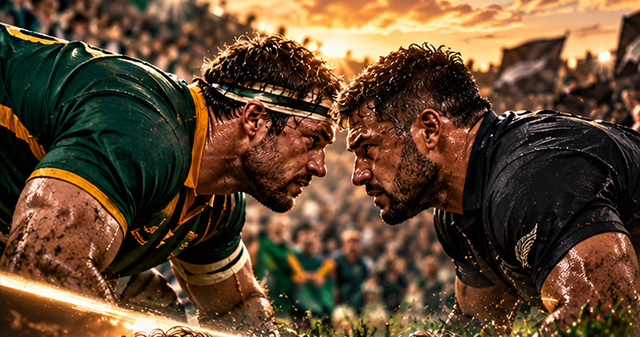
Some fixtures are remembered long after the final score disappears from the headlines. The reason is simple: a true sporting rivalry is never only about one match. It carries history, identity, emotion, memory and expectation. Whether it is South Africa against New Zealand in rugby, a fiercely contested football derby or two athletes who repeatedly push one another to new levels, rivalries give sport a story that fans can inherit, debate and relive.
Rivalries Give Sport a Story
Every competition needs results, but the contests that become part of sporting culture usually have something more behind them. Rivalries build a continuing narrative. One match becomes the next chapter in a much longer story, and fans arrive already knowing what came before.
That history changes the way supporters experience the event. A try, goal, save or late comeback can feel more significant because it sits alongside decades of earlier encounters. The players may change, coaches may come and go, but the rivalry remains.
That is why certain fixtures can feel important even when there is no trophy on the line. The meaning comes from the relationship between the opponents, not only from the competition table.
Identity Is at the Heart of Great Rivalries
Sport gives people a simple but powerful way to express belonging. A national team can represent a country, while a club can represent a city, neighbourhood, community or family tradition. When two teams with strong identities meet repeatedly, the contest can become a symbolic expression of who their supporters believe they are.
South Africa and New Zealand in rugby are a good example. The rivalry matters because both nations have built powerful rugby identities over generations. Their matches are watched not only as contests between two teams, but as meetings between two proud rugby cultures.
The same principle applies in domestic sport. Local derbies often mean more because supporters live and work alongside people who back the other side. The rivalry becomes part of everyday conversation.
History Gets Passed from One Generation to the Next
One of the most interesting things about sporting rivalry is that fans often care deeply about matches they never personally witnessed. They know about them through parents, grandparents, documentaries, old newspaper stories and highlight reels.
A young supporter can therefore arrive at a modern fixture already carrying decades of history. A famous loss, controversial decision or extraordinary comeback becomes part of the context before the game even starts.
This intergenerational memory is what gives rivalries staying power. The players taking the field today are participating in something that existed before them and will continue after they have retired.
Rivalries Create Shared Memories
Fans rarely remember an entire season in equal detail. They remember moments. A last-minute score. A decisive penalty. A dramatic comeback. A player producing the performance of a lifetime.
Rivalries concentrate those moments because the emotional stakes are already high. Even a seemingly ordinary incident can become memorable when it happens against the opponent supporters most want to beat.
Those memories also become social. People remember where they watched the match, who they were with and what the result meant at the time. Sport becomes part of personal history.
Uncertainty Keeps Rivalries Alive
A rivalry does not need both teams to be perfectly equal, but it does need the possibility of surprise. Periods of dominance can actually add to the story because the chasing side becomes determined to overturn the balance.
That creates cycles. One generation may remember one team as the standard everyone had to beat. Another may experience the roles reversing. The tension between history and the present gives supporters another reason to keep watching.
The best rivalries also have a habit of resisting simple predictions. Form matters, but emotion, pressure and the specific dynamics between opponents can make a rivalry feel different from an ordinary fixture.
Respect and Competition Can Coexist
Strong rivalry does not require hostility. In many of sport’s best contests, respect is part of what makes the rivalry meaningful. Teams want to beat an opponent precisely because they recognise the quality of the challenge.
That can be seen when players speak about historic rivals with admiration while still making it clear that winning matters. The rivalry becomes a measure of standards. Beating a respected opponent tells a team something about its own level.
For supporters, that distinction matters too. Passion is part of sport, but rivalry is at its healthiest when intensity does not become abuse.
Rivalries Reach Beyond Rugby and Football
Although team sports produce some of the world’s most famous rivalries, the same pattern appears almost everywhere. Tennis, Formula 1, boxing and other individual sports can become defined by repeated contests between exceptional competitors.
The appeal is similar: contrasting styles, repeated meetings, changing momentum and the question of who can adapt when the stakes rise. Fans begin to compare not only results, but personalities, tactics and eras.
Why Fans Keep Coming Back
At its core, rivalry gives sport continuity. It connects past and present, turns individual matches into chapters and gives fans a reason to care before the whistle is blown.
That is why rivalry can make a familiar fixture feel new every time. The history remains, but the outcome still has to be decided.
For supporters, that combination of memory and uncertainty is difficult to replace. The next match might add another famous moment, settle an old argument or start an entirely new one.